ED Boarding for Nurses: Caring for Admitted Patients Who Have Nowhere to Go
When inpatients live in the ED for hours or days, ED nurses end up running a unit inside a unit.

Photo: Pavel Danilyuk / Pexels
Boarding happens after the decision to admit has been made but there's no inpatient bed. The patient stays in the emergency department, sometimes for hours, sometimes for days. Meanwhile ED nurses are caring for new arrivals and admitted patients who need inpatient-level care, often in hallway beds.
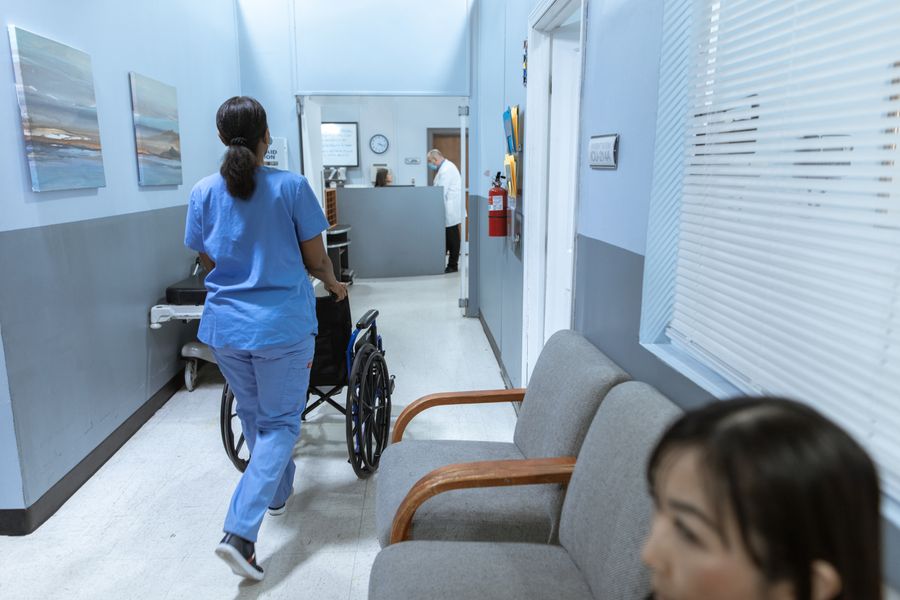
Photo: RDNE Stock project / Pexels
This isn't an ED problem the ED can solve alone. A federal report from the Agency for Healthcare Research and Quality found that boarding's causes originate at the hospital or health-system level and need solutions beyond the walls of the ED. It linked boarding to excess in-hospital mortality, more medical errors and costly delays, and said it negatively affects staff (AHRQ, AHRQ Report Identifies Strategies To Reduce Emergency Department Boarding, March 2025, ahrq.gov/news/newsletters/e-newsletter/951.html). Accreditors are paying attention too. The Joint Commission's 2026 hospital National Performance Goals require hospitals to measure and set goals for mitigating and managing boarding of patients who come through the ED (Joint Commission, National Performance Goals Effective January 2026, NPG.01.03.01 EP 2, digitalassets.jointcommission.org/api/public/content/9ca8005).
Practical takeaways:
- Ask whether your hospital has a boarding or surge policy, such as inpatient nurses coming to the ED, or a policy of moving admitted patients to inpatient hallways.
- Treat boarders as inpatients: clarify who owns orders, who's the attending, and which inpatient care standards apply.
- Escalate with specifics (number of boarders, hours boarded, acuity) through your charge nurse and house supervisor.
- Report safety events tied to boarding through your hospital's reporting system so they show up in the data leaders review.
Scripts:
- "We have [number] admitted patients boarding, [number] over [hours]. I need an inpatient nurse or a reduced ED assignment. Who can approve that?"
- "Who's the admitting provider for bed 14? I need inpatient orders, not ED orders, for the next med pass."
Sources: AHRQ (2025), link above · Joint Commission NPG 2026 (hospital), link above